
Exercises for Rounded Shoulders: A Step-by-Step Routine
Quick Summary
Rounded shoulders can be relieved with a short, consistent routine of stretches, wall angels and upper-back exercises done at home. Stretch the chest with a doorway stretch and the shoulder with a cross-body stretch, holding each for 20 to 30 seconds per side.
- Hold the doorway chest stretch for 30 seconds on each side.
- Hold the cross-body shoulder stretch for 20 to 30 seconds per side.
- Repeat each stretch two to three times, breathing slowly and avoiding bouncing.
- Stop wall angels where wall contact breaks so the neck does not strain.
- Most people feel the upper back change within three to four weeks of twice-weekly work.
Table of Contents
- What Rounded Shoulders Are and What Causes Them
- What You'll Need and How to Prepare
- Step 1: Stretches for Rounded Shoulders
- Step 2: Wall Angels for Rounded Shoulders
- Step 3: Upper Back Exercises for Posture
- How to Fix Rounded Shoulders From Desk Work
- Building Your Routine, Tracking Progress and When to See a Professional
- Frequently Asked Questions
A short, consistent routine can make a real difference for rounded shoulders. Desk-based work, phone use and long hours behind a steering wheel all pull the shoulders forward over time. For the full dedicated guide, see how to fix rounded shoulders from desk work. This guide walks you through a step-by-step routine you can do at home.
Below, you'll find stretches, wall angels and upper-back exercises, plus tips for working them into your day.
What Rounded Shoulders Are and What Causes Them
Rounded shoulders, sometimes called forward shoulders, describe a posture where the shoulders roll forward and the upper back curves (Changes in rounded shoulder posture and forward head posture according to exercise methods).
What You'll Need and How to Prepare
The PosturePlank FLEX is a posture and core training system designed to help build strength in the muscles that support the spine, hips, and shoulders. It is priced at $119.00.

Step 1: Stretches for Rounded Shoulders
Doorway chest stretch
- Place your forearm against a doorframe with your elbow at shoulder height
- Step forward gently until you feel a stretch across the chest
- Hold for 30 seconds on each side
Cross-body shoulder stretch
- Bring one arm across your chest
- Hold just above the elbow with your other arm
- Hold for 20 to 30 seconds per side
Repeat each stretch two to three times. Breathe slowly and avoid bouncing. (Source: guidelines on maintaining good posture)
Here is a quick summary of the two stretches in this routine.
| Stretch | How to do it | Hold time |
|---|---|---|
| Doorway chest stretch | Forearm on doorframe, elbow at shoulder height, step forward gently | 30 seconds each side |
| Cross-body shoulder stretch | Arm across chest, hold above elbow with other arm | 20 to 30 seconds per side |
Step 2: Wall Angels for Rounded Shoulders
Watch out: pushing your arms higher than your shoulders can comfortably reach can strain the neck. Stop at the point where the wall contact breaks.
Step 3: Upper Back Exercises for Posture
A common mistake is chasing heavier bands before the movement pattern is clean. The shoulder blades should move smoothly and symmetrically; if one side lags or the neck muscles take over, drop back to a lighter band and slow the tempo. Most people see the biggest change in how the upper back feels within three to four weeks of consistent twice-weekly work, though visible posture change is slower and varies by person.
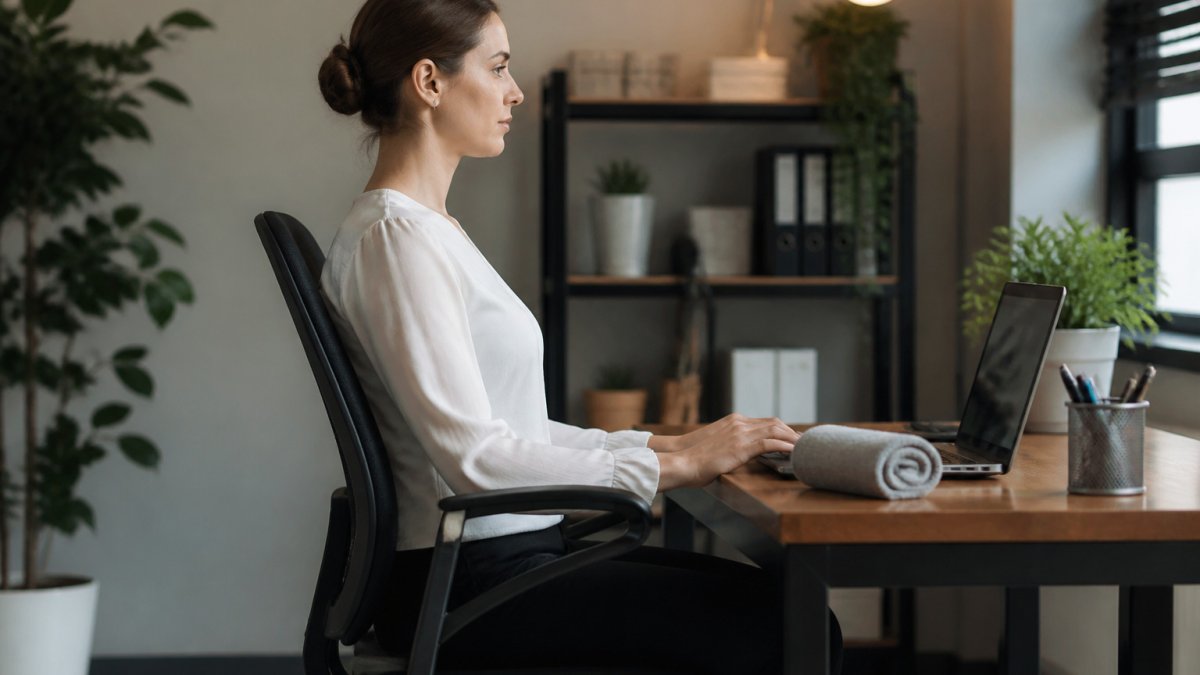
How to Fix Rounded Shoulders From Desk Work
For a closer look at the head-forward position that often comes with rounded shoulders, see our guide on how to fix tech neck posture.
Building Your Routine, Tracking Progress and When to See a Professional
Whether a posture device helps is a fair question. For a balanced look at what the research and users report, read our article on whether a posture corrector really works for back and shoulder pain.
Frequently Asked Questions
What exercises help relieve rounded shoulders?
Combine chest stretches, upper-back strengthening and shoulder-blade control work. Doorway chest stretches, wall angels, band pull-aparts and rows are common choices. Start with a few sets of 8 to 12 repetitions, three to four days per week, and move only within a pain-free range. Progress by adding repetitions, sets or resistance over several weeks. If pain is sharp, numbness or tingling appears, or symptoms worsen, stop and speak with a qualified healthcare professional before continuing.
How long does it take to improve rounded shoulders?
Changes in posture and comfort usually take several weeks of consistent practice, and results vary by person. Habits built over years of sitting and screen use rarely reverse overnight. Track a simple baseline, such as how far you can reach back in a wall angel or how long you can sit before tension returns, and reassess every four to six weeks. If you see no change after a reasonable trial, consider a professional assessment rather than adding more volume.
Can rounded shoulders cause neck or upper-back discomfort?
Prolonged forward head and shoulder positions can be associated with neck stiffness, upper-back tension and shoulder fatigue, though individual causes differ. Many people with these symptoms have other contributing factors, so this guide offers general information only. If discomfort is persistent, worsening or accompanied by arm symptoms, schedule a consultation with a qualified healthcare professional for an individual assessment.
When should you see a professional about rounded shoulders?
See a qualified healthcare professional if shoulder or neck pain lasts beyond a few weeks, wakes you at night, spreads into the arm, or comes with numbness, tingling, weakness or a recent injury. Pain that increases during the exercises is also a reason to stop and get assessed. A professional can evaluate your specific movement patterns and tell you which exercises suit your condition, which this general guide cannot do.
Consistency matters more than intensity. Start with the routine three times a week, build up gradually, and treat it as part of your daily habits. PosturePlank is built to support that process with a practical tool for posture and core training at home.
